Custom Software Development Services: Cost, Process & Benefits Explained
Businesses often reach a point where the software they use no longer fits the way they actually work. Employees may spend hours transferring information between systems, entering the same data more than once, preparing reports manually or finding workarounds for features their existing software does not provide.
These problems can become more noticeable as a business grows. Customer information may sit in one platform, inventory in another and operational data in spreadsheets. Reporting becomes harder, integrations are limited and processes that once worked for a small team become increasingly difficult to manage.
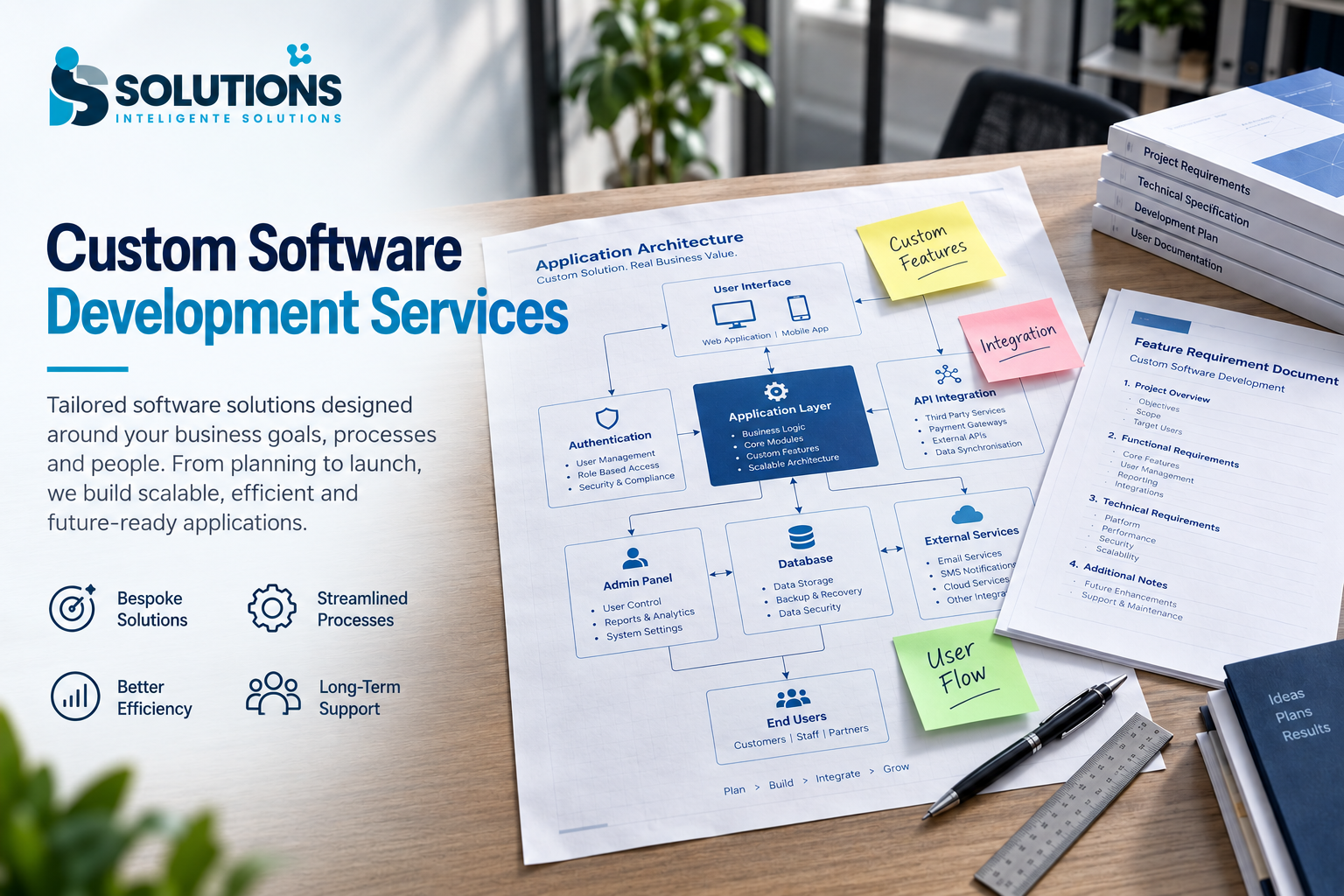
Custom Software Development Services offer another approach. Instead of requiring a business to adapt its processes around a generic product, custom software can be designed around specific users, workflows, objectives and operational requirements.
The result could be an internal management application, customer portal, CRM, ERP platform, HR system, booking solution, reporting dashboard or another specialised business system. Companies such as Inteligente Solutions can be considered when organisations want to explore whether a tailored digital solution is appropriate for a particular operational requirement.
What Are Custom Software Development Services?
Custom software development is the process of planning, designing, building, testing and maintaining software for the particular needs of an organisation.
Unlike an off-the-shelf application designed for a broad market, bespoke software can reflect the workflows, permissions, terminology and functionality of the business using it.
For example, a company may require a CRM that follows its own sales process rather than a standard pipeline. A distributor may need an inventory system connected to orders and reporting. A school could require software for student records, attendance, administration and communication. Other requirements may involve ERP software, HR management systems, customer portals, e-commerce platforms, dashboards or internal workflow applications.
However, custom development is not automatically the right answer. Before commissioning software, a business should determine whether an existing product already solves the problem adequately. Bespoke development becomes particularly relevant when important requirements cannot be addressed effectively through available systems or reasonable configuration.
Businesses investigating tailored technology requirements can explore Inteligente Solutions to understand the broader digital and software services available.
Why Businesses Choose Custom Software
The value of custom software is primarily about fit. Businesses usually consider it because their processes, customers or operating models create requirements that standard applications cannot comfortably accommodate.
Better Fit With Business Workflows
Generic software is built to work for many organisations. This can be convenient, but it may also mean accepting unnecessary features while important company-specific processes require manual workarounds.
A custom business system can instead be planned around how information enters the organisation, who needs access to it, what actions employees perform and what outputs managers require.
Process Automation
Repetitive administrative work is another common reason for considering bespoke software. Appropriate automation may reduce the need to repeatedly copy information, manually generate routine documents, update multiple systems or perform predictable workflow steps.
Automation should still be based on a properly understood process. Automating an inefficient workflow without first reviewing it can simply reproduce the same problem digitally.
Integration
Modern businesses often depend on several applications. Where suitable APIs and technical access are available, custom systems can be developed to exchange information with other tools, helping create more connected digital workflows.
Scalability and Control
A properly planned system can also allow functionality to evolve as business requirements change. Organisations may introduce additional users, permissions, departments, workflows or reporting requirements over time.
Customisation can additionally provide greater control over how users interact with the system, which information they can access and how specific processes are managed.
Custom Software Development Company: What Should You Look For?
Choosing a custom software development company requires more than reviewing a portfolio or comparing quotations.
A capable development partner should first try to understand the business problem. Technical expertise matters, but the ability to translate operational requirements into a practical software specification is equally important.
Businesses should consider the company's approach to requirement gathering, project planning, UI and UX design, development, testing, security considerations, scalability and post-launch maintenance. Communication is particularly important because requirements can become clearer as workflows are examined in detail.
Relevant previous work can provide useful context, although businesses should consider the complexity and relevance of projects rather than looking only at visual appearance.
It is also important not to select a development company purely because it submitted the lowest quotation. A cheaper proposal may cover a substantially different scope. Requirements analysis, testing, project management, documentation, maintenance and support can all affect the overall value of a development project.
For organisations considering Inteligente Solutions, the important question should similarly be whether its technical and digital capabilities align with the specific requirements, scope and long-term expectations of the proposed system.
Custom Software Development Cost: What Affects the Price?
There is no universal custom software development cost because two applications that appear similar at first can require very different amounts of planning and technical work.
Complexity is one of the largest variables. The number of features, user types and permissions can affect development effort, as can UI/UX requirements, database structure, reporting, web or mobile functionality and integrations with external platforms.
Security requirements, APIs, testing, deployment arrangements and hosting considerations can also influence scope. Businesses should additionally consider what happens after launch, including maintenance, technical support, updates and future enhancements.
A straightforward internal tool used by a small team will generally involve a different level of development from a multi-user enterprise platform containing advanced permissions, large datasets and integrations with several existing systems.
This is why clear requirements are important before requesting quotations. Businesses can review the scope of custom software development services when considering what type of solution their requirements may involve.
Custom Software Development for Small Business
Custom software development for small business can make sense when a smaller organisation has processes that are unusually specialised or difficult to manage through standard applications.
A business might need a simple customer management system, inventory application, employee records platform, booking system, order management tool or reporting dashboard. Another organisation might primarily need to connect existing processes and reduce repetitive administration.
The important consideration is whether the business problem justifies bespoke development.
If an affordable off-the-shelf platform already handles the required workflows effectively, purchasing and configuring that product may be more practical. Custom software becomes more compelling when existing products create persistent workarounds, unnecessary complexity or important functional limitations.
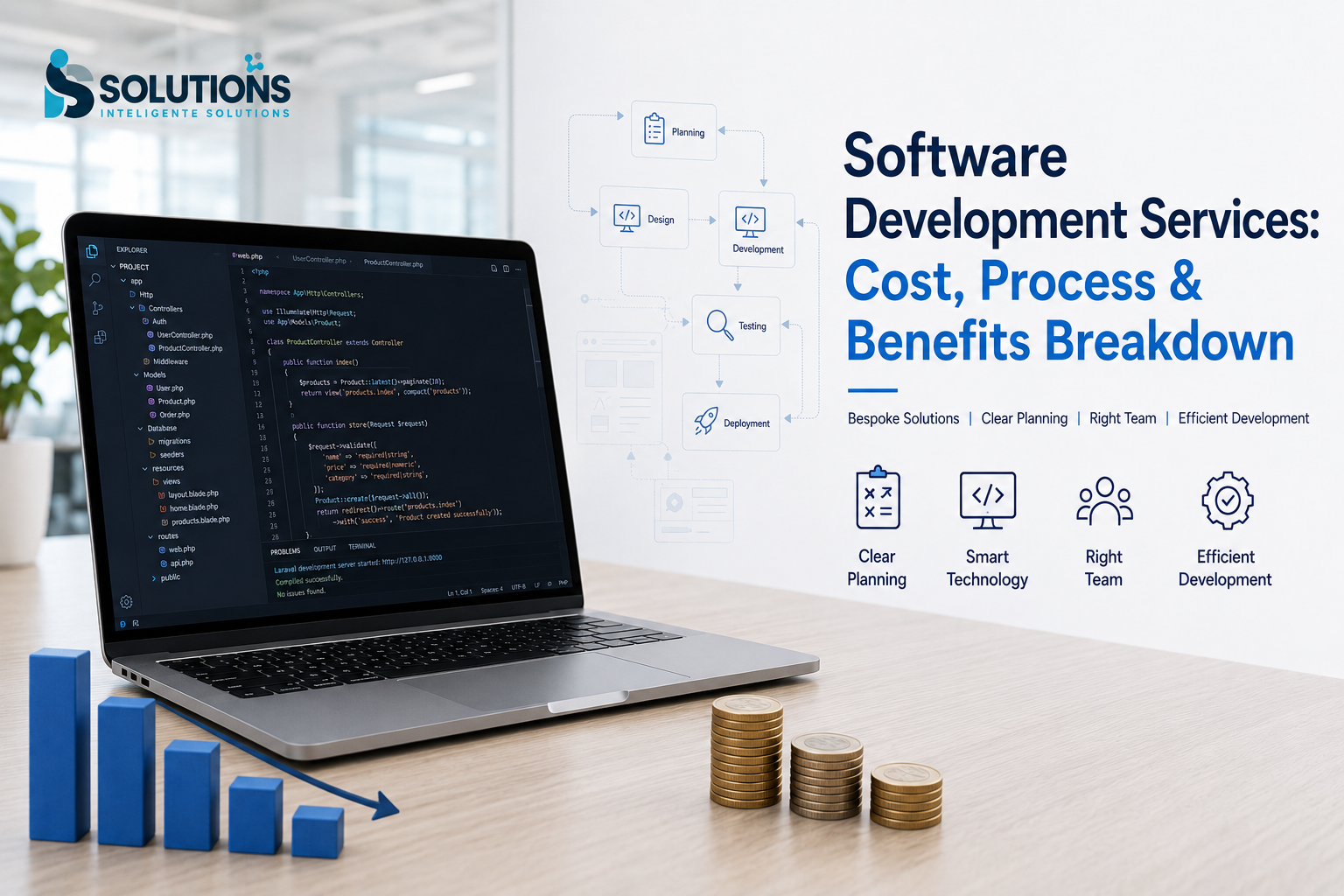
Custom Software Development Process: From Idea to Launch
Understanding the custom software development process helps businesses prepare realistic requirements and participate effectively in a project.
1. Discovery and Requirements
Development should begin with the problem, not the code. The discovery stage identifies users, existing workflows, operational difficulties, desired outcomes and essential functionality.
2. Planning
The requirements are converted into a clearer project scope. Features can be prioritised, technical considerations identified and the direction of the application established.
3. UI/UX Design
Interfaces and user journeys are planned so people can understand how to navigate the software and complete important tasks. This stage connects functionality with practical usability.
4. Development
Developers build the agreed functionality, databases, interfaces and integrations according to the project's technical requirements.
5. Testing
Testing checks whether features work as intended and helps identify defects before release. Depending on the application, testing may cover functionality, usability, performance, compatibility and relevant security considerations.
6. Deployment
Once sufficiently tested, the software is introduced into its intended environment. Deployment planning may include hosting, configuration, databases and other technical requirements.
7. Training
Employees or administrators may need guidance on workflows, features and system management, particularly when new software changes an established business process.
8. Maintenance
Software can require bug fixes, updates, security improvements and enhancements after launch. Maintenance should therefore be considered when planning the project rather than treated as an afterthought.
Businesses evaluating a provider can also examine relevant software development projects to better understand the type of work a development team undertakes.
Good software development is therefore much more than writing code. The quality of the initial understanding can influence almost every stage that follows.
Enterprise Custom Software Development
Enterprise custom software development typically involves additional complexity because larger organisations may have multiple departments, locations, user groups and existing technology systems.
Permissions can become particularly important. Different employees may require different levels of access, while managers need reporting across teams or locations. Data may also need to move between new software and legacy applications.
Other considerations can include larger databases, workflow automation, reporting structures, security requirements, integrations and the ability to accommodate future organisational changes.
Enterprise projects therefore benefit from careful discovery and phased planning. A change that appears small within one department may affect several connected processes elsewhere.
For organisations seeking to connect operational areas within a tailored platform, custom ERP software development represents one approach worth exploring when conventional ERP products do not adequately reflect the required workflows.
Custom Software Solutions for Startups
Custom software solutions for startups often have a different priority: proving the central idea without building unnecessary complexity too early.
A startup may need an MVP, customer-facing web platform, internal administration system, automated workflow or technical foundation for a digital product.
Scope control is especially important. Attempting to build every imaginable feature in the first release can increase development complexity before the business has learned how customers actually use the product.
A focused minimum viable product can allow essential functionality to be introduced first, followed by improvements based on practical feedback and evolving priorities.
For businesses whose initial product is primarily browser-based, custom website development may form part of a broader digital solution rather than requiring a completely separate software product from the outset.
Custom Software for Different Business Requirements
Custom development can address very different operational problems depending on the organisation.
CRM Software
A CRM can centralise customer information, leads, sales activities and relevant communications. Bespoke CRM development may be useful when an organisation has unusual sales stages, approval processes or reporting requirements that generic CRM platforms do not handle comfortably.
Businesses with specialised customer-management workflows can therefore investigate custom CRM software development in the context of those requirements.
HRM Software
Human resources teams may need to manage employee information, attendance, leave, internal processes and related records. Customisation can be useful where policies, approvals or organisational structures require workflows beyond those available in standard HR applications.
A tailored custom HRM software solution can consequently be considered where HR processes require organisation-specific functionality.
School Management Software
Specialised organisations can have equally specialised software needs. Schools, for example, may need to manage student information, academic processes, attendance and administration within connected workflows.
Where standard education platforms do not match those requirements, a custom school management system can be explored around the institution's particular administrative model.
Security and User Experience in Custom Software
Security should be considered throughout a software project. Relevant measures can include authentication, role-based permissions, data protection practices, backups, secure development approaches, software updates, monitoring and appropriate testing.
The exact requirements depend on the type of system, the information it handles and the environment in which it operates.
User experience deserves similar attention. Software can technically perform every required function while remaining frustrating or inefficient for employees and customers.
Clear navigation, logical workflows, consistent interfaces, responsive layouts where appropriate, accessibility considerations and user feedback can help shape a more usable product.
Visual communication can also extend beyond the application interface. Where a wider digital project requires supporting brand or interface assets, graphic design and creative services may complement the software or website development work.
Hire Custom Software Developers or Choose a Development Company?
Businesses looking to hire custom software developers have several options, including an individual freelancer, a freelance team, an internal development team or a software development company.
There is no universally correct choice.
A relatively contained project may suit an experienced individual developer. A complex application may require several disciplines, such as project planning, UI/UX, frontend and backend development, database expertise, testing and ongoing technical support.
Building an internal team can provide long-term control but also creates recruitment and management responsibilities.
Comparing hourly rates alone can therefore be misleading. Businesses should evaluate the complete project requirement, necessary expertise, communication model, expected timeline, maintenance needs and responsibility after launch.
When Is Custom Software Actually Worth Considering?
Custom development may be worth investigating when existing products cannot support important workflows, specialised functionality is required or several systems need to work together.
It can also make sense when manual processes are creating operational difficulties, an organisation requires a distinctive customer-facing platform, existing software demands excessive workarounds or the business needs greater control over specific processes.
Conversely, off-the-shelf software can be the better choice when a reliable product already satisfies the requirements at a reasonable cost. The objective should not be to commission custom software simply because it offers more flexibility. The objective is to choose the most appropriate solution to the underlying business problem.
What Should Businesses Ask Before Starting a Project?
Before development begins, decision-makers should be able to answer several practical questions:
- What business problem are we trying to solve?
- Who will use the software?
- Which features are essential for the first release?
- Which features can be introduced later?
- Which existing systems require integration?
- What information will the software store or process?
- What security requirements need consideration?
- What is the realistic project budget?
- What maintenance and support will be required after launch?
- How will the organisation determine whether the finished system meets its objectives?
These questions make conversations with developers more productive and help prevent a project from expanding without clear priorities.
How Inteligente Solutions Can Help With Custom Software Requirements
Inteligente Solutions works across customised software and wider digital requirements, allowing businesses to explore solutions according to the problem they are attempting to address rather than starting with a predetermined type of application.
Depending on the requirement, that could involve a custom business system, CRM, HRM, ERP platform, website-based solution or specialised management application. The relevant approach depends on users, workflows, functionality, integrations and the intended role of the system within the organisation.
Businesses evaluating the company can learn more about Inteligente Solutions before deciding whether its capabilities are appropriate for their proposed project.
The key consideration remains requirements alignment. A useful development conversation should establish what needs to be solved, which functionality matters and how the proposed software will fit into the organisation's existing processes.
How to Get Started With Custom Software Development
Start by identifying the business problem rather than creating a long feature list. Define who will use the software and document the workflows those users currently follow.
Next, separate essential features from functionality that could wait until a later phase. Identify required integrations, important data, security considerations and an achievable budget.
These details can then be discussed with a development provider. Review the proposed scope carefully and make sure responsibilities for development, testing, deployment, maintenance and post-launch support are understood before work begins.
When a business is ready to discuss a specific idea or operational challenge, it can contact Inteligente Solutions to explore what type of technical approach may suit the requirement.
Final Thoughts
Custom Software Development Services can provide businesses with technology built around specific users, processes and objectives rather than forcing every requirement into a standard software package.
The cost depends on scope and complexity, while successful development involves considerably more than coding. Requirements discovery, planning, UI/UX, development, testing, deployment and ongoing maintenance all contribute to the finished system.
Small businesses may benefit when standard products cannot accommodate specialised workflows. Startups can use focused development to build essential functionality without unnecessary initial complexity, while enterprise organisations generally require deeper planning around users, integrations, data, security and scalability.
Just as importantly, custom software is not necessary in every situation. When an existing platform solves the problem effectively, it may be the more practical choice.
For businesses that have identified genuine limitations in their current systems, the next step is to document those problems and discuss them with an appropriate development partner. Inteligente Solutions can be considered as one option for organisations exploring customised software, business management systems and wider digital solutions built around clearly defined requirements.