eCommerce Website Development Services: Cost, Features & Process Explained
Selling products online requires more than an attractive website. Customers expect accurate product information, convenient navigation, straightforward checkout and reliable order updates. Behind every purchase, businesses need systems that manage payments, inventory, customer information and fulfilment.
Professional eCommerce Website Development Services connect these requirements into a functional online store. The objective is not simply to display products but to create a purchasing experience that works alongside the company's commercial operations.
Inteligente Solutions provides website development, custom software and digital services relevant to businesses planning online commerce. Its published capabilities include custom storefronts, Shopify development, Odoo commerce, payment connections, inventory management and B2B solutions.
Businesses exploring custom eCommerce website development should understand how platform selection, design, functionality and integrations affect the finished website.
This article explains the development approaches, essential features, technical considerations, project costs and practical decisions involved in building an online store.
What Are eCommerce Website Development Services?
eCommerce Website Development Services involve planning, designing, developing, configuring and supporting websites that enable businesses to sell products or services online.
Unlike a conventional business website, an eCommerce platform must support commercial transactions and the information associated with them.
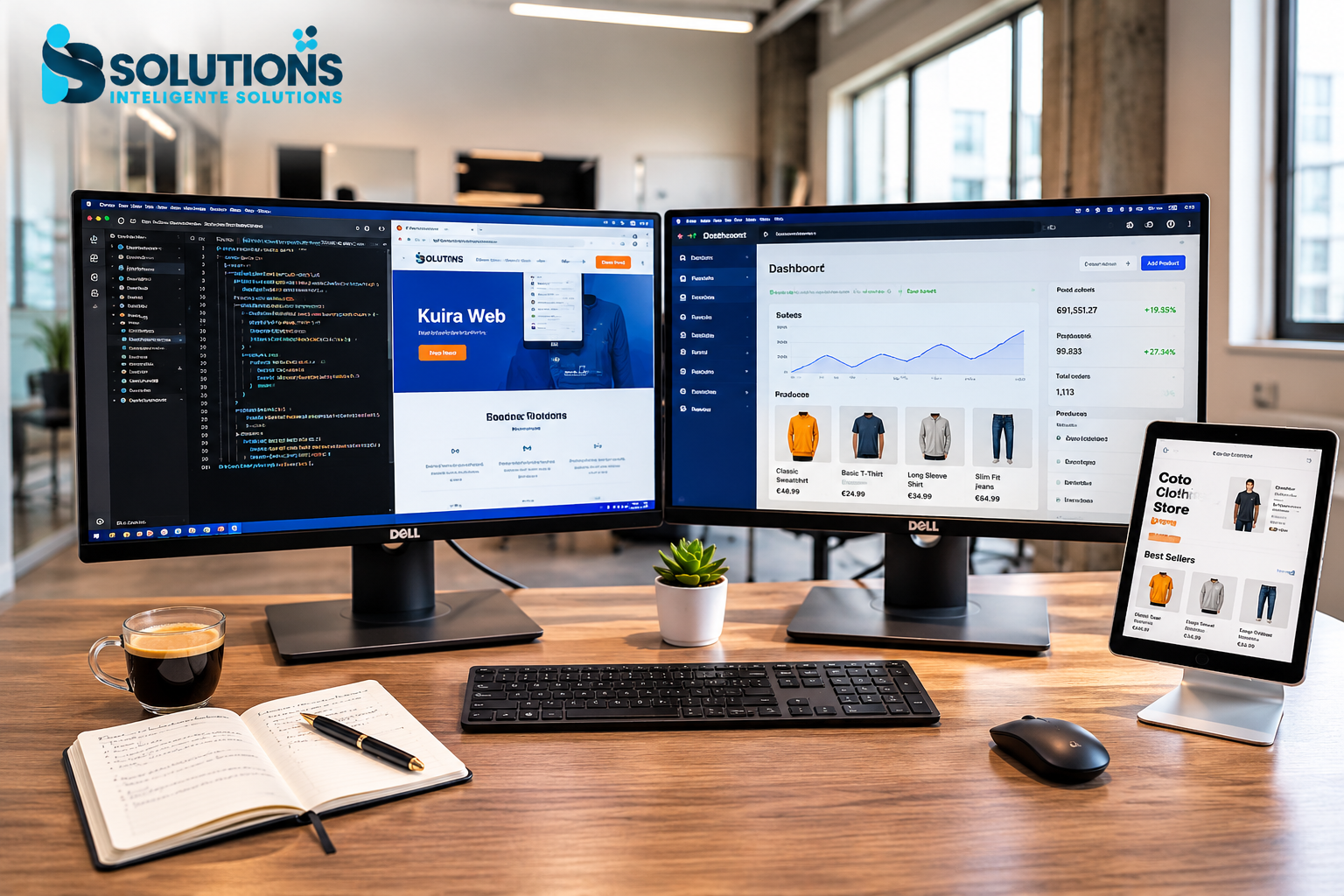
The customer-facing storefront includes product categories, product detail pages, search functionality, shopping baskets, checkout and customer account features where required.
The backend manages information that customers may never see directly, including product records, stock availability, order statuses, administrative permissions and connections to other business applications.
For example, when a customer purchases a product, the website may need to confirm payment, record the order, update stock information and provide details for fulfilment.
These functions must work together reliably.
An experienced eCommerce website development company should therefore understand the customer's purchasing journey and the operational activities that follow each transaction.
The development approach depends on the product catalogue, sales model, expected transaction activity, existing software and future business requirements.
Custom eCommerce Website Development vs Template-Based Stores
Not every business requires a fully customised online store. The appropriate level of development depends on how closely standard platform functionality matches the company's needs.
Template-Based eCommerce Websites
Template-based stores use an established commerce platform and a ready-made design.
They can suit businesses with straightforward product catalogues, conventional checkout requirements and limited technical complexity.
A small retailer selling clothing, accessories or household products may be able to launch using a suitable theme, standard product management and supported payment methods.
This approach can reduce initial development work. However, design flexibility and advanced functionality may depend on the platform's configuration options or additional applications.
Businesses evaluating broader website development services should distinguish between a standard business website and the additional transactional functionality required for online commerce.
Customised and Bespoke Development
Custom eCommerce website development becomes relevant when existing features cannot adequately support the business.
For example, a company may require configurable products, customer-specific prices, unusual purchasing workflows or connections with internal software.
Customisation can involve extending an existing platform or developing a more specialised solution.
A tailored approach offers greater control over particular functions but usually requires additional planning, development, testing and maintenance.
Businesses considering custom website development should first identify which requirements genuinely need bespoke functionality.
The most appropriate solution is the one that meets operational needs without introducing unnecessary technical complexity.
Shopify vs WooCommerce vs Custom eCommerce: Which Is Better?
The comparison of Shopify vs WooCommerce vs custom eCommerce should begin with the business's products, technical resources, operating budget and required integrations.
Each approach offers different advantages and responsibilities.
Shopify
Shopify is a hosted commerce platform with established storefront functionality, product management, checkout and an ecosystem of themes and applications.
It can be suitable for retailers seeking a structured commerce environment without managing every aspect of the underlying hosting infrastructure.
Businesses can configure standard features and extend functionality through supported applications or custom development.
However, subscription fees, paid applications, payment-related charges and advanced customisation can affect long-term costs.
Inteligente Solutions offers Shopify development covering customised storefronts, theme development and integration-related requirements.
The appropriate Shopify configuration depends on the store's catalogue, customer journey and operational needs.
WooCommerce
WooCommerce is an open-source eCommerce solution built around WordPress.
It provides flexibility through WordPress themes, plugins and custom development.
Businesses using WooCommerce can control their hosting arrangements and select extensions that support their requirements.
However, hosting, software updates, security, performance and plugin compatibility require ongoing attention.
WooCommerce may suit organisations already using WordPress or those seeking a flexible platform with suitable technical support.
Its overall cost depends on the selected infrastructure, extensions and development scope.
Fully Custom eCommerce Development
A fully customised system may be appropriate when standard platforms cannot reasonably accommodate complex business requirements.
Examples include specialised product configurations, unique order approval processes, tailored administrative systems and demanding integration requirements.
Custom development can offer greater architectural flexibility, but it also introduces responsibilities involving documentation, testing, security, maintenance and future enhancements.
No platform is universally superior.
A growing retail brand may find Shopify suitable, while another business may prefer WooCommerce or a tailored system because of its existing technology and operational requirements.
Essential eCommerce Website Features Every Online Store Should Consider
The most important eCommerce website features support two objectives: helping customers purchase products and helping the business manage those purchases.
Product Catalogue and Product Management
A well-organised catalogue allows customers to understand what is available.
Product information should include accurate descriptions, relevant images, prices, variations and availability details.
Businesses selling products in different sizes, colours or configurations need appropriate variation management.
Administrative tools should also make it practical to update product information as the catalogue changes.
Navigation, Search and Filtering
Customers should be able to locate relevant products without unnecessary effort.
Clear category structures, logical menus and effective search functionality support product discovery.
Filtering may be valuable for larger catalogues where customers compare products by size, price, brand or other attributes.
The available filters should reflect meaningful product characteristics rather than create unnecessary complexity.
Shopping Basket and Checkout
The shopping basket should clearly display selected products, quantities and relevant charges.
Checkout should guide customers through the required information without confusing steps.
Delivery details, payment options and order confirmation should be presented understandably.
A complicated checkout can create frustration, particularly on mobile devices.
Customer Accounts and Order Management
Customer accounts may support saved information, order history and repeat purchasing.
However, not every store requires compulsory registration. Guest checkout may be suitable where supported.
Order management tools help administrators review purchases, manage fulfilment stages and maintain accurate order records.
The required functionality depends on the business's sales process.
Security, Performance and Maintenance
Online stores should use appropriate encryption, access controls, secure configurations and maintained software components.
Website performance also matters. Oversized images, excessive scripts and unsuitable hosting can affect loading times.
Backups, updates, monitoring and periodic testing should form part of the ongoing operating plan.
Security is a continuing responsibility rather than a feature that can be considered permanently complete at launch.
eCommerce Website Design and Development: UI/UX, Mobile Experience and Conversion
Effective eCommerce website design and development combines visual presentation with practical functionality.
A store must help visitors understand the products, compare available options and complete purchases confidently.
User Interface and Customer Experience
User interface design concerns the visual and interactive elements customers use, including menus, buttons, forms, product cards and checkout controls.
User experience design considers the complete journey through the store.
Professional UI/UX design services can support the planning of navigation, visual hierarchy, product presentation and purchasing interactions.
Readable content, consistent branding, accessible controls and clear calls to action all contribute to usability.
However, attractive design alone does not guarantee sales. Product suitability, pricing, trust, delivery arrangements and customer expectations also influence purchasing decisions.
Mobile-Responsive Storefronts
An eCommerce website should function effectively on smartphones, tablets and desktop computers.
Mobile customers need readable product information, appropriately sized controls and checkout forms that work on smaller screens.
Navigation should remain practical without hiding essential purchasing information.
Some businesses may eventually consider dedicated mobile app development services to support repeat purchasing, customer accounts or specialised interactions.
A mobile application is a separate development consideration and is not automatically required for an effective online store.
eCommerce Integrations: Payments, Inventory, ERP and B2B Portals
An online store may need to exchange information with payment providers, inventory applications, accounting systems and other business software.
The required integrations depend on how the company operates.
eCommerce Payment Gateway Integration
eCommerce payment gateway integration connects the checkout experience with an authorised payment provider.
The gateway supports transaction processing and communicates payment information required to complete the order workflow.
Businesses should assess supported payment methods, currencies, operating countries, transaction charges and settlement arrangements.
Payment status, failed transactions, refunds and order confirmation must also be considered.
A gateway's availability depends on the provider and the business's location and eligibility.
The development team should confirm technical compatibility and implement the connection according to the provider's requirements.
Inventory Management and Stock Visibility
Inventory management helps businesses maintain accurate records of available products.
A store connected to an inventory management system may support stock updates, availability information and order-related inventory changes.
This can be particularly relevant to retailers selling through multiple channels or managing stock across different locations.
However, synchronisation methods vary.
Real-time updates, scheduled exchanges and manual adjustments are different approaches, and the required behaviour should be confirmed during project planning.
ERP and Odoo Commerce
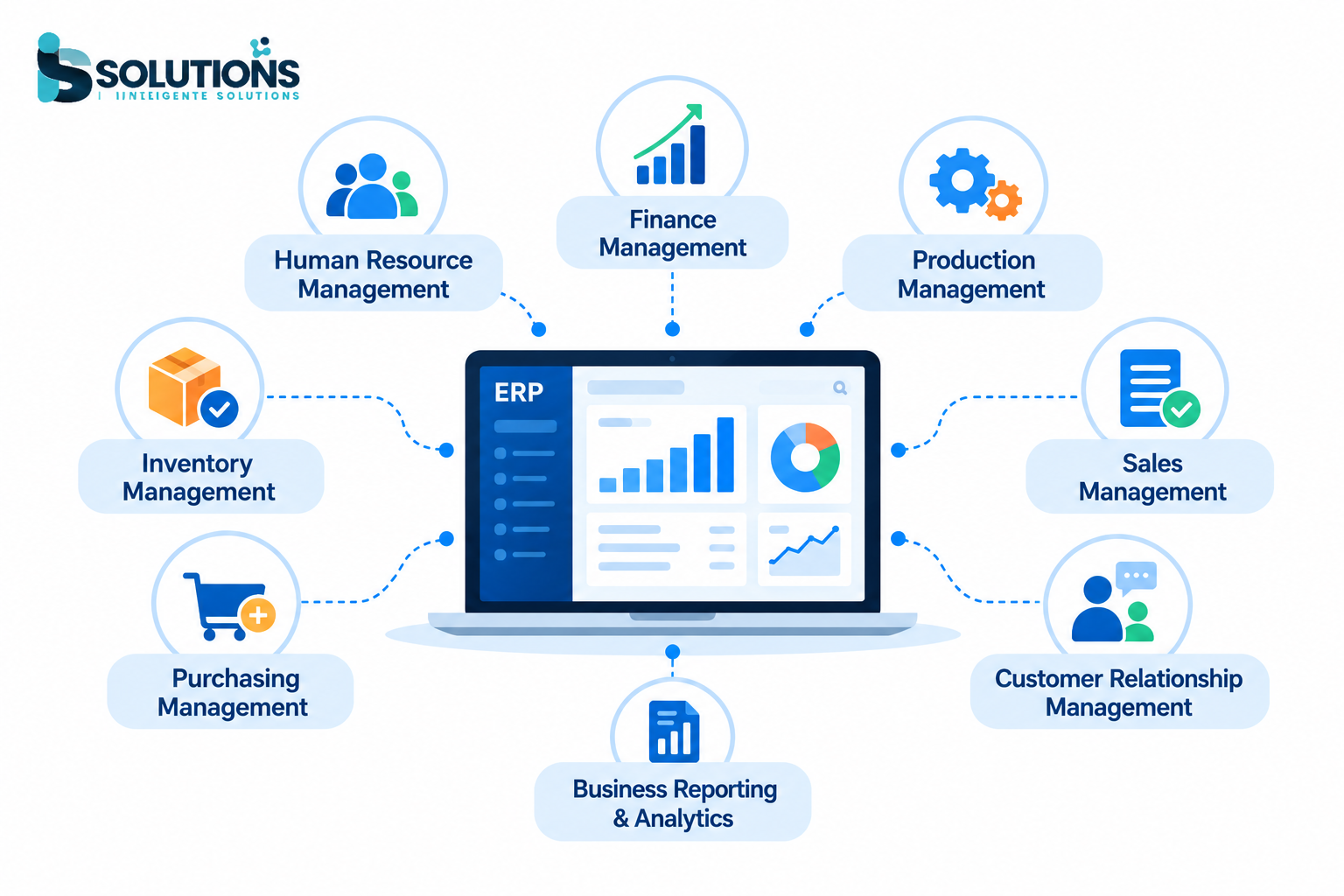
Enterprise Resource Planning software connects business functions such as sales, purchasing, inventory and operational reporting.
For companies with more complex processes, custom ERP software may be relevant when evaluating how an online store should communicate with wider business systems.
Odoo commerce can also be considered where businesses want to connect online selling with Odoo-based operational applications.
The suitability of an ERP integration depends on existing software, required data flows, permissions and workflow configuration.
Data migration and integration testing should be included in the scope where necessary.
B2B eCommerce Website Development
B2B eCommerce website development supports businesses selling to other organisations.
Wholesale customers may require business accounts, bulk ordering, repeat purchasing or customer-specific pricing.
Some businesses also need quotation requests, purchasing approvals or account-based access.
These features should reflect the actual commercial process.
For example, a wholesaler with negotiated prices may require a different ordering system from a retailer selling products at fixed public prices.
Advanced B2B functionality should be defined during discovery rather than assumed to be included automatically.
eCommerce Website Development Process: From Planning to Launch
A structured development process helps businesses clarify requirements and assess the finished website before launch.
Discovery and Requirement Analysis
The first stage establishes the business model, products, target customers and operational requirements.
The development team should understand how customers purchase, how orders are processed and which existing systems need consideration.
Budget, priorities and future plans should also be discussed.
Platform and Technology Selection
The next stage involves choosing an appropriate platform or architecture.
Shopify, WooCommerce, Odoo-related commerce functionality and custom development should be evaluated against the agreed requirements.
The decision should consider functionality, integration feasibility, technical responsibilities and long-term operating costs.
Store Structure and UI/UX Planning
The website structure is organised around product categories, navigation, product pages, customer accounts and checkout.
Wireframes or design prototypes may help clarify the proposed customer journey.
Reviewing these decisions before development can reduce unnecessary revisions.
Frontend and Backend Development
Frontend development creates the visible storefront and interactive customer experience.
Backend development and configuration support products, orders, customer accounts, permissions and business workflows.
The balance between configuration and original development depends on the selected platform.
Integrations and Data Configuration
Required payment, inventory, ERP or other systems are configured according to the agreed scope.
Product data, customer records and existing content may also need preparation or migration.
Data accuracy should be reviewed before launch because incorrect records can affect daily operations.
Testing and Quality Assurance
Testing should cover product selection, shopping baskets, checkout, payment responses, forms and administrative functionality.
Mobile responsiveness, browser compatibility, access permissions and integration behaviour also require attention.
Where appropriate, testing should include failed transactions, unavailable products and other realistic scenarios.
Launch and Post-Launch Support
Launch involves deployment, domain configuration and final checks in the live environment.
After launch, businesses should monitor performance, review operational issues and maintain software components.
Ongoing support arrangements should clarify responsibility for updates, backups, monitoring and future changes.
eCommerce Website Development Cost in 2026
Understanding eCommerce website development cost requires distinguishing the initial development investment from recurring operational expenses.
There is no universal price because eCommerce projects differ in platform selection, design complexity, functionality and integration requirements.
Platform Subscriptions and Hosting
Hosted platforms generally involve recurring subscription charges.
Shopify, for example, publishes subscription pricing that varies according to plan, billing arrangement and market.
These charges cover access to the platform rather than a complete custom development project.
WooCommerce's core software is available without a platform licence fee, but hosting, premium extensions and technical maintenance may involve separate expenses.
Custom systems require their own hosting and infrastructure arrangements.
Design and Development Costs
A store using an existing theme and standard features may require less development than a fully customised website.
Original interface design, complex product variations, custom checkout behaviour and administrative functionality can increase the amount of work.
The size and condition of the product catalogue also matter.
Importing a small set of prepared products differs from migrating thousands of records with inconsistent descriptions, images and attributes.
Integration and Third-Party Expenses
Payment gateways, inventory systems, ERP platforms and other applications may introduce additional costs.
Some expenses relate to subscriptions or transaction charges, while others involve implementation, configuration and testing.
Businesses should ask which third-party charges are included in a quotation and which will be paid separately.
Ongoing Maintenance and Support
An eCommerce website continues to require attention after launch.
Recurring expenses may include hosting, platform subscriptions, software renewals, security maintenance, backups and technical support.
The most useful project quotation explains both initial development work and ongoing responsibilities.
Inteligente Solutions should be consulted for a project-specific estimate based on the required platform, features, integrations and support arrangements.
eCommerce Website for Small Business: What Should You Start With?
An eCommerce website for small business should focus on essential selling functionality and manageable operating costs.
A new retailer generally needs a clear product catalogue, mobile-responsive layout, reliable checkout, suitable payment methods and straightforward order administration.
Advanced dashboards, extensive integrations or complex automation may not be necessary at the beginning.
For example, a small brand with a limited product range may benefit from a configured commerce platform rather than a fully bespoke application.
As operations grow, additional requirements may emerge, including wholesale accounts, more advanced stock management or connections with accounting software.
Businesses should therefore consider future expansion without paying for unnecessary complexity in the initial version.
A practical starting point is a dependable store that supports current sales and can be improved as requirements become clearer.
How to Choose the Right eCommerce Website Development Company
Businesses planning to hire eCommerce website developers should evaluate technical capability alongside commercial understanding.
A provider should be able to explain how the proposed website will support the organisation's products, customers and daily operations.
Relevant portfolio evidence can help demonstrate the nature of previous work.
Businesses can review our recent projects to understand the types of digital work presented by Inteligente Solutions. Individual examples should be assessed against the requirements of the proposed eCommerce project.
A professional proposal should identify the platform, included functionality, design responsibilities, integrations, testing approach and launch arrangements.
Ownership of website assets, administrative access, documentation and third-party subscriptions should also be clarified.
Businesses should ask how future changes will be handled and what post-launch support is available.
The lowest initial quotation is not necessarily the most suitable option if essential functionality or ongoing responsibilities remain undefined.
How Inteligente Solutions Approaches eCommerce Website Development
Inteligente Solutions presents eCommerce development as part of its wider website and software development capabilities.
Its published service information describes custom storefronts, Shopify development, Odoo commerce, payment connections, inventory management, custom eCommerce management systems and B2B portals.
These services address different parts of an online selling operation.
Storefront development concerns product presentation and the customer purchasing experience.
Shopify development involves configuring or customising stores within Shopify's commerce environment.
Inventory and ERP-related development may be relevant where online orders need to interact with existing business records.
Custom management systems and B2B portals may be considered for more specialised administrative or purchasing workflows.
The company's broader capabilities also include design, mobile applications and digital growth services.
For businesses preparing to attract customers after launch, SEO services may support technical search visibility, website structure and content optimisation.
SEO should be treated as an ongoing discipline rather than a guarantee of particular rankings.
The appropriate combination of services depends on the business's requirements.
Not every eCommerce project requires a mobile application, ERP integration, custom management system or marketing campaign.
Why Consider Inteligente Solutions for Your eCommerce Project?
Inteligente Solutions is a relevant technology provider to consider when a business needs an online storefront and potentially related software services.
Its published capabilities cover website development, eCommerce functionality, platform customisation, business software and ongoing technical support.
This breadth may be useful for organisations that need to discuss both customer-facing functionality and internal business processes.
For example, a growing retailer may require an online store with appropriate payment processing, while a wholesale supplier may need to evaluate account-based purchasing and inventory integration.
The most suitable development approach should emerge from a review of actual business requirements.
After the website is launched, some businesses may also consider digital marketing services to support customer acquisition through appropriate online channels.
Marketing activities should be planned separately from development unless they are expressly included in the agreed proposal.
Before starting a project, businesses should prepare their product information, customer requirements, preferred functionality, existing software details and available budget.
These details provide a useful basis for discussing scope, technical feasibility and commercial expectations.
Conclusion: Choosing the Right eCommerce Development Approach
Professional eCommerce Website Development Services should connect an effective shopping experience with the systems required to manage online sales.
The correct approach depends on business requirements, platform suitability, product management, checkout, payments, inventory, integrations and ongoing support.
Shopify, WooCommerce and custom development each offer different advantages and responsibilities. The most complex solution is not automatically the most appropriate.
Inteligente Solutions offers published eCommerce and related technology capabilities that businesses can consider when launching a new store or improving an existing platform.
To discuss your requirements, share your product catalogue, preferred features, integration needs and project objectives with the company.
You can request a free quote to begin a project-specific discussion about the development scope, technical requirements and suitable implementation approach.