Mobile App Development Services: Turning Your App Idea Into Reality
Most app ideas begin with a fairly specific business problem: a booking process that takes too long, a sales team that cannot access data on the road, a retailer losing customers to slicker competitors online. The idea itself is rarely the hard part. What separates a workable product from an app that never gets past the pitch deck is everything that happens afterwards choosing the right platform, planning the interface, building and testing the software properly, and thinking ahead to how the app will be maintained once real users start relying on it. This is the territory covered by Mobile App Development Services, and understanding how that process actually works makes it far easier to plan a project that has a realistic chance of succeeding.
This article looks at how mobile app development services are structured, how businesses choose between the available platforms and technologies, what tends to drive cost, and how the process differs for a startup, a growing enterprise or a business selling online. Where relevant, it also refers to how Inteligente Solutions approaches these services, based on what the company publishes about its own work.
What Are Mobile App Development Services?
Mobile app development services cover the full lifecycle of building a mobile application, from early planning and interface design through to coding, testing, release and ongoing support. A development partner is typically involved in defining what the app needs to do, deciding which platforms to target, designing how users will move through the product, writing and testing the underlying code, and preparing the app for submission to the Google Play Store or the Apple App Store.
Businesses that engage with professional mobile app development services are usually looking for more than someone to write code. They want a partner who can help translate a business requirement into a working product, make sensible technical decisions along the way, and remain available once the app is live to fix issues and support future updates. The scope of that support varies considerably depending on the size and complexity of the project, which is why early conversations about requirements matter so much.
How Inteligente Solutions Approaches Mobile App Development
Inteligente Solutions positions its mobile development work as part of a broader set of digital services that also includes web design, custom software development and software consulting. Rather than treating an app as an isolated piece of code, the company's approach connects mobile development with the surrounding technical picture, including how an app might need to talk to existing business systems or sit alongside a company website.
Readers who want to understand the people behind this approach, rather than just the services on offer, can find background information through the page where Inteligente Solutions describes itself and its focus areas. This kind of context is worth reviewing early, since it gives a sense of whether a provider's general approach fits the scale and style of a particular project before any detailed conversation about requirements takes place.
Custom Mobile App Development: Why Businesses Choose It Over Templates
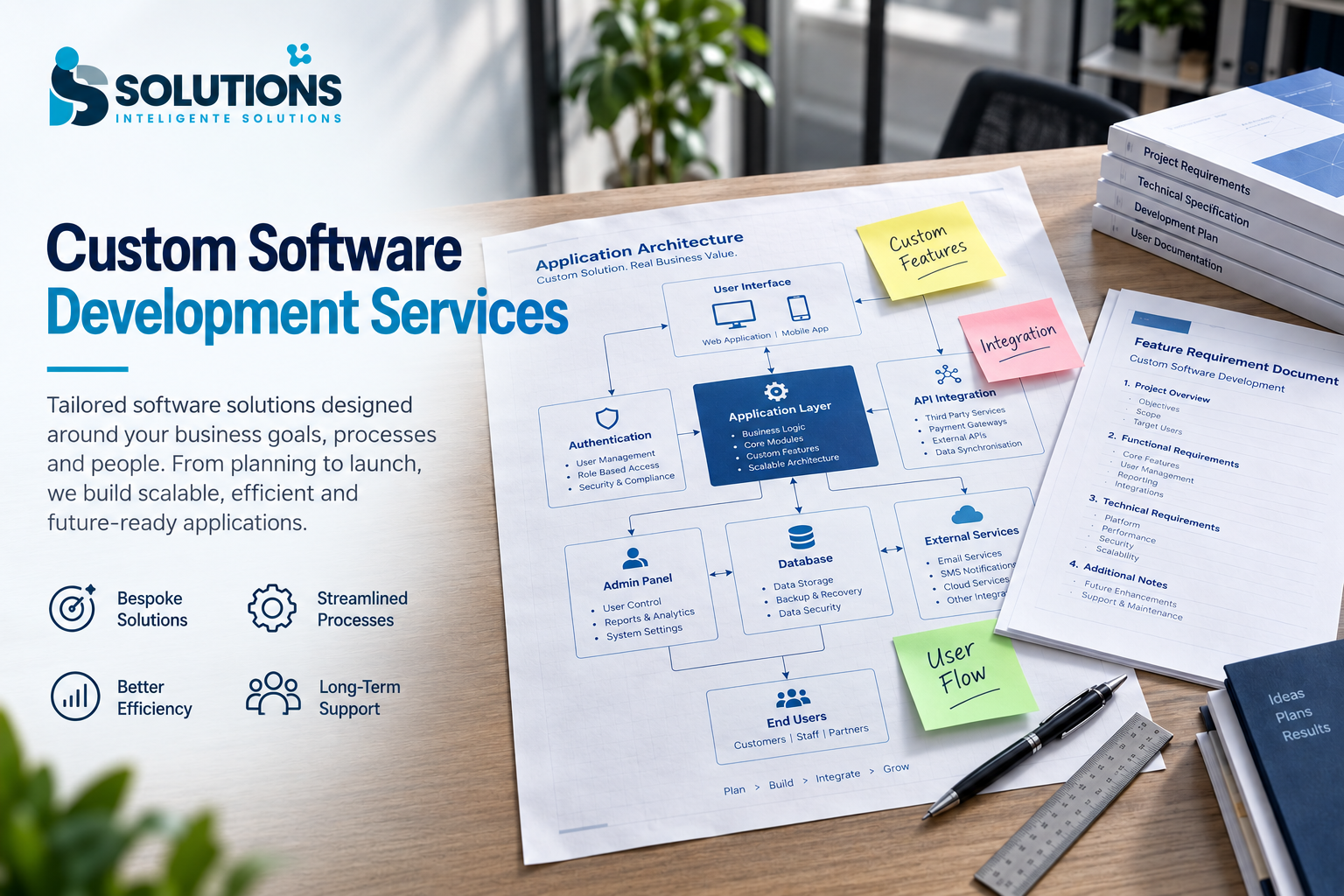
Custom mobile app development means building an application around a specific business's workflows, branding and user requirements, rather than adapting an existing template built for generic use. Businesses tend to choose this route when their processes do not map neatly onto off-the-shelf software, when integration with internal systems is required, or when the user experience needs to reflect a particular brand rather than a generic layout.
This is not automatically the right approach for every business, however. A company with limited functionality requirements, a tight budget, or a straightforward use case may be far better served by a simpler build or an existing platform adapted to its needs. The decision genuinely depends on the business model in question, the complexity of the workflows involved, the available budget, and how much the app needs to scale or integrate with other systems over time. Where a project does call for something built specifically around a business's operations, this often overlaps with tailored software for business requirements, particularly when the mobile app needs to connect with back-office systems rather than function as a standalone product.
Android vs iOS App Development: Which Should You Choose First?
One of the earliest practical decisions in any mobile project is which platform to prioritise. Android app development services and iOS app development services involve different tools, different design conventions and, in many cases, different user expectations, so the choice is rarely arbitrary.
Android has a larger global device footprint and a much wider range of hardware, screen sizes and manufacturers, which affects how testing is approached and how much variation a development team needs to account for. iOS, by contrast, runs on a narrower range of Apple devices, which can simplify testing, but comes with its own set of interface conventions and App Store review requirements. Neither platform is inherently superior; the right starting point depends on where a business's target audience actually spends their time, what the app needs to achieve commercially, and how much budget is available to build for both platforms at once rather than sequentially. A retail app aimed at a broad consumer market might reasonably need both from launch, while a niche business tool aimed at a specific professional audience may only need one to begin with.
Android App Development Services for Business Applications
Android development typically involves building with Google's supported languages and tools, and designing around Android's own interface guidelines rather than assuming the same layout will translate directly from another platform. Businesses building for Android also need to think about device fragmentation, since users may be running the app on a wide variety of hardware, screen sizes and operating system versions, which has a direct effect on testing and long-term maintenance.
For businesses evaluating this route, reviewing how a development partner handles native Android development is a useful step, since native development is generally associated with better performance and closer access to device features than a purely web-based alternative. Whether native development is necessary, though, still depends on what the app is expected to do and how central performance and hardware access are to its purpose.
iOS App Development Services and Apple-Focused Experiences
iOS development follows Apple's own design language and platform requirements, and apps intended for the App Store need to meet Apple's review guidelines before release. This tends to produce a more consistent hardware environment to design and test for, but it also means accepting Apple's constraints around distribution, in-app purchases and platform behaviour.
Businesses targeting audiences that skew heavily towards Apple devices, or that need to align closely with the design expectations iOS users have come to expect, often prioritise native iOS application development for that reason. As with Android, the decision to build natively rather than through a cross-platform framework usually comes down to how much the app depends on platform-specific features, animation quality and long-term performance.
Flutter vs React Native: Choosing the Right Cross-Platform Approach
Cross-platform app development (Flutter/React Native) offers an alternative to building separate native apps for Android and iOS. Instead, a single codebase is used to produce apps for both platforms, which can reduce the amount of duplicated development work and help keep future updates consistent across devices.
Flutter, built around Google's own toolkit, renders its own interface components rather than relying entirely on each platform's native elements, which gives development teams a high degree of control over how consistent the app looks across Android and iOS. React Native takes a different approach, bridging to native components more directly, which some teams prefer when an app needs to feel closely aligned with each platform's own conventions. Neither framework is universally faster, cheaper or better; the right choice depends on the complexity of the interface, how much native functionality the app needs to access, the technical background of the team maintaining it afterwards, and how the project is likely to evolve. Businesses exploring this route as part of their planning can review how custom Flutter development is approached, while React Native remains worth considering as a general industry option alongside it, evaluated on its own technical merits for the specific project at hand.
How Much Does Mobile App Development Cost in 2026?
Mobile app development cost is one of the most common questions businesses ask, and one of the hardest to answer with a single figure, because cost is driven almost entirely by scope rather than by any fixed market rate. The number of screens, the complexity of the features, whether the app needs a backend, how many third-party integrations are involved, and whether the project targets one platform or several all affect the final cost significantly.
Authentication systems, payment processing, real-time notifications, and integrations with existing business software each add development and testing time. Security requirements, particularly for apps handling personal data or payments, also influence cost, as does the level of polish expected in the interface design. Ongoing maintenance and post-launch support, including operating system updates and bug fixes, represent a further cost that is easy to overlook when only the initial build is considered. Because pricing varies so much by scope, and because published rates can quickly become outdated, the most reliable way to understand likely costs for 2026 is to define requirements clearly and discuss them directly, for example through mobile application development solutions where scope-specific estimates can be worked through properly rather than assumed from a generic price list.
Mobile App Development for Startups: From Idea to Launch
Mobile app development for startups usually begins well before any code is written, with a clear-eyed look at who the app is actually for and what problem it solves for them. Skipping this step is one of the more common reasons early-stage apps struggle to find users after launch, since a technically well-built app aimed at the wrong problem rarely performs any better than a rough one aimed at the right problem.
Once the audience and problem are reasonably well defined, founders typically need to prioritise features rather than attempt to build everything at once, focusing instead on a minimum viable product that tests the core idea with real users as early as realistically possible. Budget constraints often shape this process directly, since a smaller initial build makes it easier to gather feedback, adjust the product and avoid spending heavily on features nobody ends up using. Design and development then proceed alongside testing, with launch treated less as a finish line and more as the point where genuine feedback starts to inform the next round of improvements. Reviewing a development partner's past work, such as the Inteligente Solutions project portfolio, can help founders judge whether a provider's experience looks relevant to the kind of product they are trying to build, though every startup's journey through this process looks different depending on its market, resources and ambitions.
Enterprise Mobile App Development for Growing Organisations
Enterprise mobile app development tends to involve a different set of pressures compared with a startup build. Larger organisations often need an app to work alongside existing systems, respect established data handling and permissions structures, and support a wider range of internal users with different access levels. Integration is frequently the hardest part of these projects, since the app rarely operates in isolation and instead needs to exchange data reliably with software the business already depends on.
Scalability also matters more directly in this context, since enterprise apps are often expected to support growing numbers of users, additional features over time, and changing internal requirements without needing to be rebuilt from scratch. Security expectations tend to be higher as well, given the sensitivity of the data many enterprise applications handle, although any specific security claims from a development partner are worth verifying directly rather than assumed. These requirements generally call for closer collaboration between the app development team and whoever manages the organisation's broader technical environment, since the app is only ever one part of a larger operational picture.
eCommerce Mobile App Development for Digital Commerce
eCommerce mobile app development brings its own set of practical considerations, centred on how customers browse, choose and pay for products through a mobile interface. Product discovery, search and filtering all need to work smoothly on a smaller screen, customer accounts and order history need to be easy to manage, and checkout needs to be as frictionless as possible, since abandoned carts are a persistent challenge for mobile commerce specifically.
Behind the interface, an eCommerce app usually needs to connect to inventory systems, payment processors and order management tools, which makes backend integration just as important as the visible design. Businesses already running an online store, or planning to launch one alongside a mobile app, often find it useful to consider custom eCommerce development as part of the same conversation, since the mobile app and the underlying commerce platform generally need to work in close coordination rather than as separate projects handled independently.
How UI/UX Design Shapes a Successful Mobile Application
Interface design is often treated as a finishing touch, but it has a direct effect on whether an otherwise well-built app actually gets used. Navigation needs to feel intuitive without requiring explanation, visual hierarchy needs to guide attention to what matters on each screen, and the overall experience needs to remain consistent as users move between different parts of the app.
Accessibility is also worth building in from the start rather than retrofitting later, since it affects how usable the app is for a wider range of people and, in many sectors, is increasingly expected as standard practice. Testing design decisions with real users before committing to full development tends to catch usability problems far earlier and more cheaply than discovering them after launch. Good UI/UX design for mobile applications works alongside development rather than after it, since design decisions often have technical implications, and technical constraints often shape what design choices are realistic in the first place.
How to Choose a Mobile App Development Company
Selecting a mobile app development company is easier when the evaluation is based on concrete, checkable criteria rather than general reputation. Relevant experience with similar projects, demonstrated capability across the platforms and technologies a project actually needs, and a track record of clear communication throughout a project are all reasonable things to look for.
It is worth reviewing whether a provider's stated service areas genuinely cover what a project requires, whether their approach to UI/UX design fits the standard expected, and whether they offer meaningful support after launch rather than disappearing once the app is released. Looking through a company's completed work, such as the examples of completed digital projects a provider makes available, gives a more grounded sense of whether their experience genuinely lines up with a particular business's needs than marketing copy alone can offer. No single provider is right for every project, so this evaluation should always be weighed against the specific requirements, budget and timeline involved.
When to Hire Mobile App Developers
Deciding when to hire mobile app developers usually comes down to whether a business has clearly defined what it needs before engaging a technical partner. Having a reasonably clear sense of the app's core purpose, the platforms it needs to support, the key features it requires, and how it should look and feel makes it far easier for a development team to scope the work accurately and avoid costly changes of direction later.
Integration requirements are worth thinking through early as well, since connecting a new app to existing business systems can significantly affect both timeline and cost if it is not identified until development is already underway. Ongoing maintenance expectations should also be part of this conversation from the outset, since an app that is never updated tends to fall behind operating system changes and security requirements fairly quickly. Businesses that take the time to work through these points before approaching a development partner generally find the resulting conversations far more productive than those that begin with only a rough idea and no defined scope.
How Inteligente Solutions Can Support a Complete App Development Project
Many mobile projects do not exist in isolation. A business launching an app often needs a website to support it, an eCommerce platform to sell through, or custom backend software to keep everything connected behind the scenes. Inteligente Solutions frames its work around this broader picture, offering mobile development alongside related services rather than treating an app as a standalone deliverable disconnected from the rest of a business's digital presence.
For a business weighing up how a new app fits alongside an existing or planned website, reviewing web solutions that complement a mobile app is a sensible starting point, since a mobile app and a company website often need to share branding, data and, in some cases, user accounts. Keeping these pieces connected from the planning stage tends to produce a more coherent experience for users than treating each channel as an entirely separate project.
From App Idea to a Practical Development Roadmap
Turning an app idea into something buildable generally means working through a sequence of practical decisions rather than jumping straight into development. Defining the audience and core problem comes first, followed by decisions about platform priority, the choice between native and cross-platform development, and a realistic view of the budget available for both the initial build and ongoing support afterwards.
UI/UX planning and technical architecture typically need to be considered together, since design ambitions and technical feasibility constantly influence one another throughout a project. None of these decisions need to be made in isolation, and discussing requirements directly with a development partner is usually the most efficient way to test assumptions before committing significant budget to a particular direction. Businesses at this stage can discuss your mobile app project to work through these questions in the context of their own specific requirements, rather than trying to map a generic process onto a project that may not fit it neatly.
Conclusion
Building a successful mobile application involves a long sequence of interconnected decisions, from defining the core idea and choosing a platform, through selecting between native and cross-platform development, to planning realistic costs, thoughtful UI/UX and dependable post-launch support. None of these choices exist in isolation, and the right answer for one business is rarely the right answer for another, which is precisely why scoping a project properly matters more than following a generic template. Whether the priority is a lean startup build, an enterprise system that needs to integrate with existing infrastructure, or a mobile storefront supporting an eCommerce business, the fundamentals remain the same: a clear understanding of the audience, a realistic view of budget and scope, and a development partner capable of turning those decisions into a working product. Inteligente Solutions approaches this work as part of a broader set of digital services, which is worth bearing in mind for businesses considering how a mobile app fits alongside the rest of their technical plans.